Boat owners often spend time reviewing hull coverage, liability, and hurricane storage plans while overlooking the trailer that gets the boat to the ramp. In Southwest Florida, a trailer may be exposed on the road, in a driveway, at a storage yard, near saltwater, or beside a busy marina.
The right insurance review should ask where the trailer is covered, what happens while it is attached to a vehicle, how theft is handled, and whether the watercraft policy, auto policy, or separate endorsement is expected to respond.
Use Florida Fish and Wildlife Conservation Commission boating resources as a neutral reference point. The policy documents, carrier rules, and written quotes still control the final coverage decision.
Separate the boat, trailer, and towing vehicle
A boat, a trailer, and a towing vehicle may involve different policies and different coverage triggers. The auto policy may address certain liability situations while towing, but it may not automatically cover physical damage to the trailer. The watercraft policy may include trailer coverage only if it is selected and shown correctly.
Owners should ask the agency to review all three pieces together. That helps identify gaps, duplicated assumptions, or situations where a trailer is listed at too low a value to replace after a covered loss.
Review theft, storage, and parking exposure
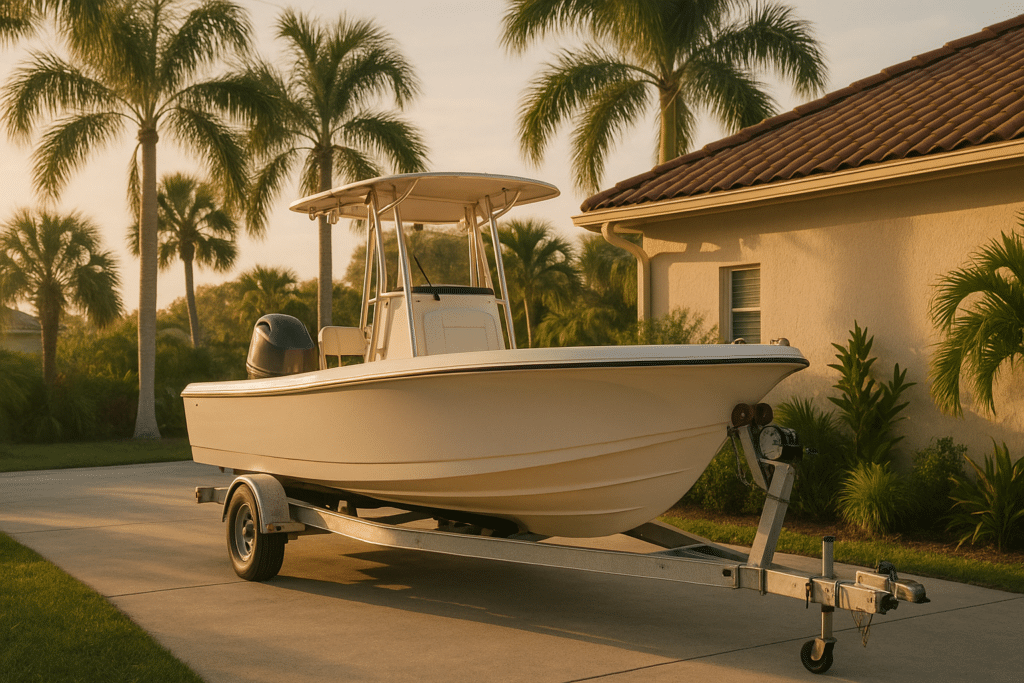
Boat trailers are movable property, which makes theft and storage details important. A trailer parked beside a house, inside a fenced storage lot, at a marina, or at a seasonal rental can create different underwriting questions. Locks, GPS devices, security gates, and storage contracts may also matter.
Ask whether the trailer is covered while detached from the vehicle, parked empty, stored for the season, or left near a ramp. If the answer depends on location or policy language, document it before relying on the coverage.
Do not confuse registration rules with insurance
Florida Fish and Wildlife Conservation Commission boating resources are a useful starting point for vessel rules and safety topics. Insurance is a separate contract. A boat owner can be compliant with registration requirements and still have a coverage gap involving the trailer.
That distinction is especially important when a lender, storage yard, marina, or homeowners association asks for proof of insurance. Their requirements may be different from what state registration rules address.
Check limits against replacement cost
Trailer values can be underestimated, especially when the trailer was purchased years ago or bundled into the boat purchase paperwork. Aluminum trailers, brakes, axles, bunks, winches, tires, and saltwater exposure can make replacement more expensive than expected.
If the policy lists a stated amount, compare it with current replacement pricing and the deductible. A low limit may be acceptable for some owners, but it should be a conscious decision rather than a number carried forward from an old quote.
Plan for storm season and transport
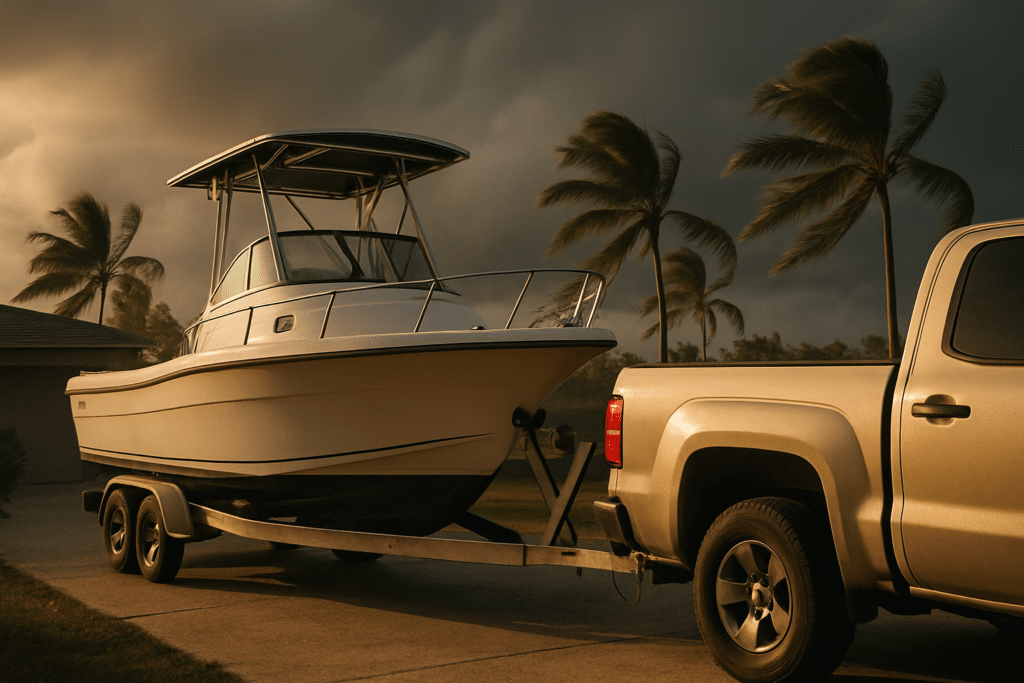
A storm plan may involve moving the boat inland, storing it on the trailer, or securing it at home. Each option can raise coverage questions. Ask whether the policy changes when the boat is trailered, relocated, stored outside the normal area, or moved by someone else.
A trailer that is not road-ready can also create problems. Tires, lights, bearings, straps, and brakes are practical maintenance items, but they affect whether the boat can be moved when time matters.
Boat trailer coverage questions
A useful review should connect the quote to the actual watercraft, trailer, and timing. For Bassine Insurance clients, that usually means pairing the watercraft insurance conversation with local details from Southwest Florida and a clear next step through the quote request process.
- Is the trailer listed on the watercraft policy with an accurate value?
- What covers physical damage to the trailer while it is being towed?
- Is theft covered while the trailer is detached, parked, or stored?
- Do marina, lender, or storage yard contracts require specific proof of coverage?
- Does the policy address hurricane relocation or seasonal storage plans?
- Are accessories, spare tires, winches, and trailer equipment included or limited?
Questions to ask before binding coverage
The quote stage is the right time to ask plain-language questions. Ask what is covered, what is excluded, what documentation is still needed, how deductibles apply, and what would change the premium after binding. If a quote relies on an inspection, application answer, or carrier approval, keep that condition visible until the policy is issued.
It is also worth asking how claims would be reported and what records should be saved now. Photos, receipts, inspection forms, lender letters, lease requirements, and policy pages are easier to organize before a loss than after one.
How to keep the review organized
Keep the current watercraft insurance policy, renewal offer, competing quotes, payment options, and open questions in one folder. A Southwest Florida insurance review is easier when the decision is based on the same set of documents instead of scattered emails, screenshots, and partial quote summaries.
Compare each option by effective date, premium, deductible, major limits, exclusions, endorsements, and underwriting conditions. If one quote is still subject to inspection, document review, a marine survey or proof of condition, or carrier approval, treat it as conditional until the carrier confirms the policy.
Make a short note beside every tradeoff. A higher deductible may be acceptable when the savings are clear and the household has cash available after a loss. A lower limit may not be acceptable when the uncovered exposure would create a larger problem than the premium savings justify.
Vessel and usage details should be updated before the final choice is made. A new or replaced trailer, added or removed watercraft, a change in storage or mooring, hull or motor upgrades, lienholder changes, or seasonal use can all change how an application should be answered.
After binding coverage, save the issued policy and compare it with the quote. The declarations page should match the selected limits, deductibles, named insureds, the listed watercraft and trailer, any lienholder, and effective date. Any mismatch should be corrected quickly.
Finally, set a reminder for the next review. Insurance needs can change after a move, a new vessel or trailer, a change in storage, a change in how often the boat is used, or a new family obligation. A yearly review keeps the policy closer to real life.
FAQ
Is a boat trailer automatically covered by boat insurance?
Not always. Some policies include trailer coverage only when it is selected, listed, or limited to certain situations.
Does my auto policy cover my boat trailer?
It may address some liability while towing, but physical damage to the trailer is a separate question that should be confirmed with the policy.
Should I update the value of an older boat trailer?
Yes, if replacement costs have changed or equipment was upgraded. The listed value should be compared with current pricing and the deductible.
When comparing options, keep notes from each watercraft insurance quote in one document. Include carrier name, premium, deductibles, major limits, effective date, payment terms, and any open underwriting conditions. That small habit makes the final choice easier to defend and easier to revisit at the next renewal.
For Southwest Florida households, the timing of a review can be just as important as the quote itself. Starting early leaves room for corrected applications, missing documents, updated inspections, lender questions, and a second look at coverage terms before a payment is made.
Every insurance decision has a budget side and a risk side. A practical review keeps both visible, so the household can decide which tradeoffs are acceptable and which ones would create too much uncertainty after a covered loss.
Local insurance review with Bassine Insurance
Bassine Insurance can review a watercraft policy, trailer details, towing vehicle, and storage plan together so Southwest Florida boat owners know where each risk is addressed.