Agreed value boat insurance addresses an important question: how will the policy value your boat if a covered loss makes it a total loss? The answer can differ from a policy based on actual cash value. But the valuation label is only one part of the comparison. Deductibles, partial repairs, equipment, and the boat’s permitted use still need a careful look.
For owners boating around Fort Myers and Southwest Florida, a useful quote discussion starts with the actual vessel and how it is used. Bring the boat details, current policy, and any recent changes to the equipment. Then compare the settlement terms alongside the other parts of the watercraft insurance quote, rather than choosing from the premium alone.
Start With the Total-Loss Valuation Method
An agreed-value arrangement generally establishes the insured value with the company when the policy is written. An actual-cash-value arrangement considers the boat’s value at the time of loss, including depreciation under the contract’s terms. The BoatUS actual cash value explanation illustrates the second approach. It describes one insurer’s offering, not your own policy’s coverage.
Ask the agent to identify the settlement provision in each proposed contract. Confirm the insured amount and what it includes. A number on a quote may refer to the hull, a combined boat-and-motor amount, or another defined scope. The description needs to match the vessel you are asking to insure.
Also ask how the policy defines a total loss and what deductions or conditions can apply to settlement. Do not turn the phrase “agreed value” into a promise that every incident produces a check for the full amount on the declarations. A partial repair and a covered total loss are different situations.
Keep valuation separate from the cause of damage. An agreed amount does not make an excluded event covered. Read the physical-damage coverage, exclusions, and conditions together with the settlement wording. If a particular concern matters to you, describe it plainly and ask the agent to point to the relevant provision.
There is no universal best choice based only on the age of the boat. Compare the options actually available for your vessel and the amount of financial uncertainty you can accept. A more familiar policy label is not a substitute for seeing how the proposed terms work.
Ask About Partial Repairs and Depreciation
A boat can need a repair without being a total loss. Ask how the policy handles that situation before assuming its total-loss valuation also governs every damaged component. Canvas, upholstery, electronics, propulsion equipment, and other items can be treated differently under a particular contract.
For example, BoatUS describes agreed-hull-value coverage while also identifying depreciation provisions for certain items. That illustrates why the detailed wording matters. It does not establish the terms Bassine can obtain for a particular boat or mean that another insurer uses the same definitions.
Use a straightforward question during the quote review: “If this component were damaged in a covered incident, how would the repair or replacement amount be calculated?” Ask the question for an item important to your own boat. Then identify any deductible, limit, or depreciation rule in the answer.
Do not confuse mechanical wear or maintenance needs with covered accidental damage. Tell the agent about the boat’s age, condition, and equipment history, and ask what exclusions or optional coverages are relevant. Avoid assuming that an agreed value removes the need to maintain the vessel or makes every equipment failure insurable.
Keep the explanations with the quote so you can compare equivalent terms. If one option describes replacement treatment for a component and another applies depreciation, note that difference explicitly. A premium comparison becomes more useful when the coverage differences are visible alongside it.
Build an Accurate Boat and Equipment Record
Gather the vessel’s year, make, model, length, and identification information from your records. Add the motor details and the location where the boat is normally kept. Check that the current policy and any new quote describe the same equipment. A recent purchase or replacement can leave older paperwork out of date.
Make a separate list of significant additions. Include installed electronics, a replacement motor, and other changes you want the insurer to consider. Keep purchase and installation records where available. Do not assume the cost of an upgrade is automatically added to the insured value simply because it is attached to the boat.
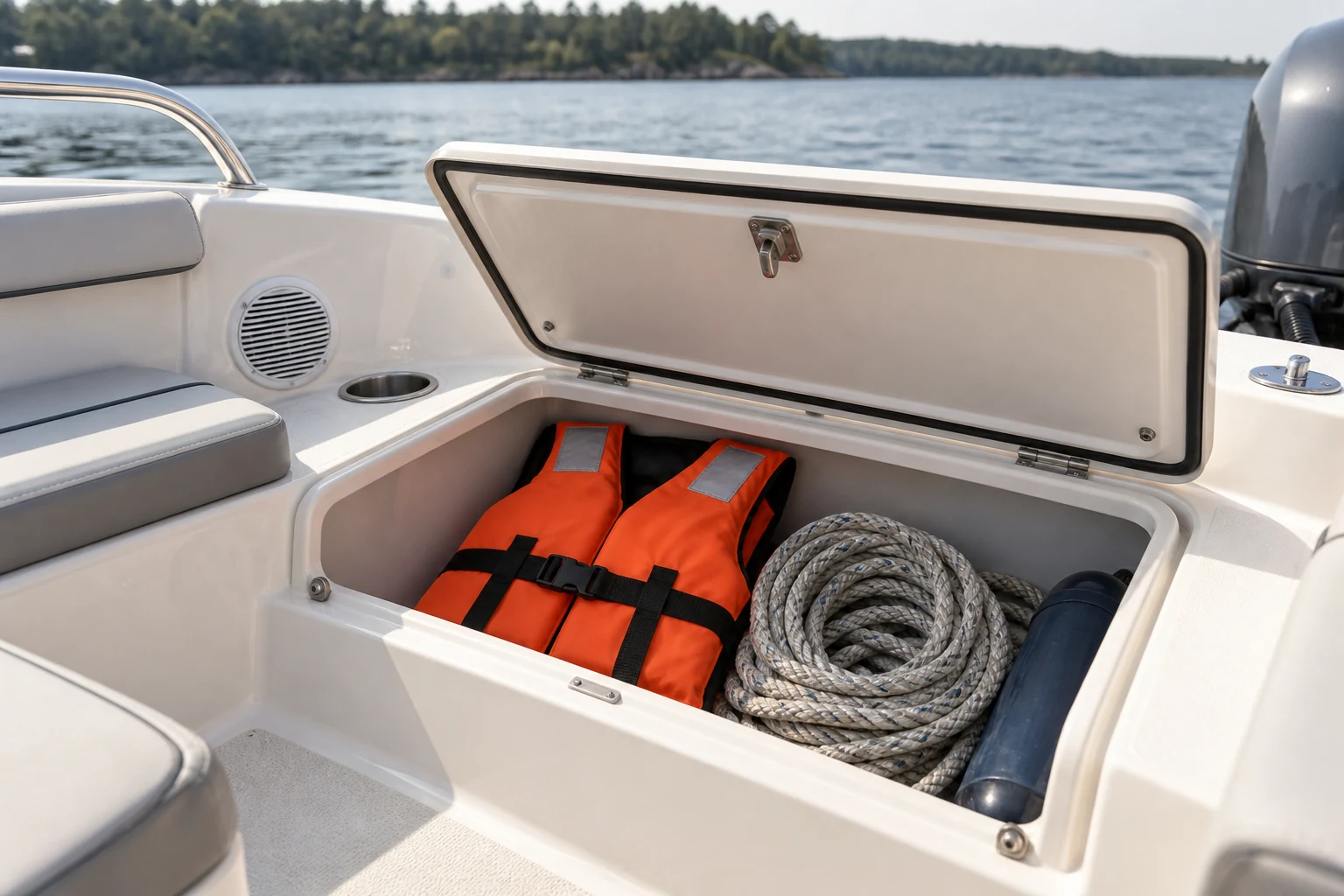
Ask how portable belongings and boating equipment are handled. A life jacket, fishing equipment, a phone, and an installed navigation unit are not necessarily treated alike. Identify which items need to be listed, what limits apply, and whether separate coverage is available. The aim is an accurate description, rather than a guess that everything aboard falls within one number.
A marine survey may also be part of the application. Progressive explains that survey requirements can depend on the boat, including its age, size, or value. Ask the proposed insurer whether a survey is required and what kind it will accept before commissioning one solely for insurance.
If a survey or inspection identifies an issue, ask how it affects the application and what documentation is needed after any work. Keep the survey, repair records, photographs, and insurance correspondence together. A survey’s value estimate and the policy’s accepted insured amount are separate records that should be reconciled during the discussion.
Compare the Whole Quote Before Deciding
Start with two columns, one for each option you are considering. Record the total-loss settlement method, insured amount, physical-damage deductible, and partial-repair treatment. Leave any unexplained item as a question for the agent. Do not fill a gap from an advertisement for a different insurer or product.
Next, compare the boating activity described in the application. Explain where you cruise, where the boat is stored, who operates it, and whether any use involves payment or business activity. A quote based on a different use pattern is not an equivalent comparison, even if the insured value and premium appear similar.
Review cruising limits, any seasonal restrictions, and applicable storm provisions. Progressive’s storm-coverage explanation notes that geographical limits and selected physical-damage coverage can matter. Ask which terms apply to the policy in front of you, rather than treating general hurricane coverage language as permission for every route or circumstance.
Discuss liability, towing, salvage, and trailer protection as separate subjects where relevant. A higher hull value does not answer all of those questions. Confirm what is included, what is optional, and which limits or deductibles apply. Keep emergency contact details with the final policy so they are accessible when needed.
Before accepting the quote, check the final documents against the information you provided. Confirm the effective date and any outstanding application requirements. At renewal, review the boat details again, especially after equipment changes or a change in storage or use. Ask whether the valuation remains appropriate instead of assuming last year’s figure should carry forward unchanged.
Frequently Asked Questions
Does agreed value mean every claim pays the full insured amount?
No. The settlement depends on whether the incident is covered, whether it is a total or partial loss, and the contract’s terms. Ask about applicable deductions, limits, and conditions. The label alone is not a guarantee of payment.
Can an agreed-value policy still apply depreciation?
It can contain depreciation provisions for particular items or partial losses. Read those sections separately from the total-loss valuation. Ask how an important component on your own boat would be treated before comparing premiums.
Should I tell the agent about a new motor or electronics?
Yes. Provide accurate details and relevant purchase or installation records. Ask whether the insured description, amount, or equipment coverage needs updating. An upgrade is not automatically reflected in the policy just because the work is complete.
Can Bassine help me compare boat insurance options?
Bassine Insurance Agency offers watercraft insurance. Contact the team with your vessel details and current documents to discuss available options. Eligibility, valuation methods, limits, and specific features depend on the insurer and the boat.
To discuss agreed value boat insurance or questions about your current watercraft policy, contact Bassine Insurance Agency in North Fort Myers at (239) 995-0333. Bring the boat and equipment details so the conversation can focus on the coverage terms that matter to your use.